

The Fed Rate Decision
There’s nothing like a Federal Reserve announcement day to spark a flood of headlines tying market moves to the Fed’s latest decision.
But in today’s case, there wasn’t actually a decision to react to — nor did anyone expect one.
For weeks, markets have been pricing in a near-zero chance of a rate cut at this meeting, and Fed officials have been clear in their public comments.
The central bank is currently navigating two competing priorities:
its dual mandate of promoting maximum employment (i.e., supporting a strong economy)
maintaining price stability (keeping inflation in check)
Recently, Fed officials have acknowledged the tension between these goals.
On one side, tariffs and tighter fiscal policies could weigh on the economy and employment, making the case for potential rate cuts.
On the other side, those same tariffs could push inflation higher, which would normally argue for raising rates.
In short, the Fed had little choice today but to stay on the sidelines and wait for clearer evidence on which of these forces will dominate.

For his part, Fed Chair Jerome Powell repeatedly emphasized this “wait and see” stance in response to a wide range of press questions — all variations on the same theme.
Bond Market Reaction
As for mortgage rates, they were modestly lower on the day, but the bond market had already been trending in that direction ahead of the FOMC rate decision.
The change was minor enough to be seen more as a sideways move in the broader rate picture.
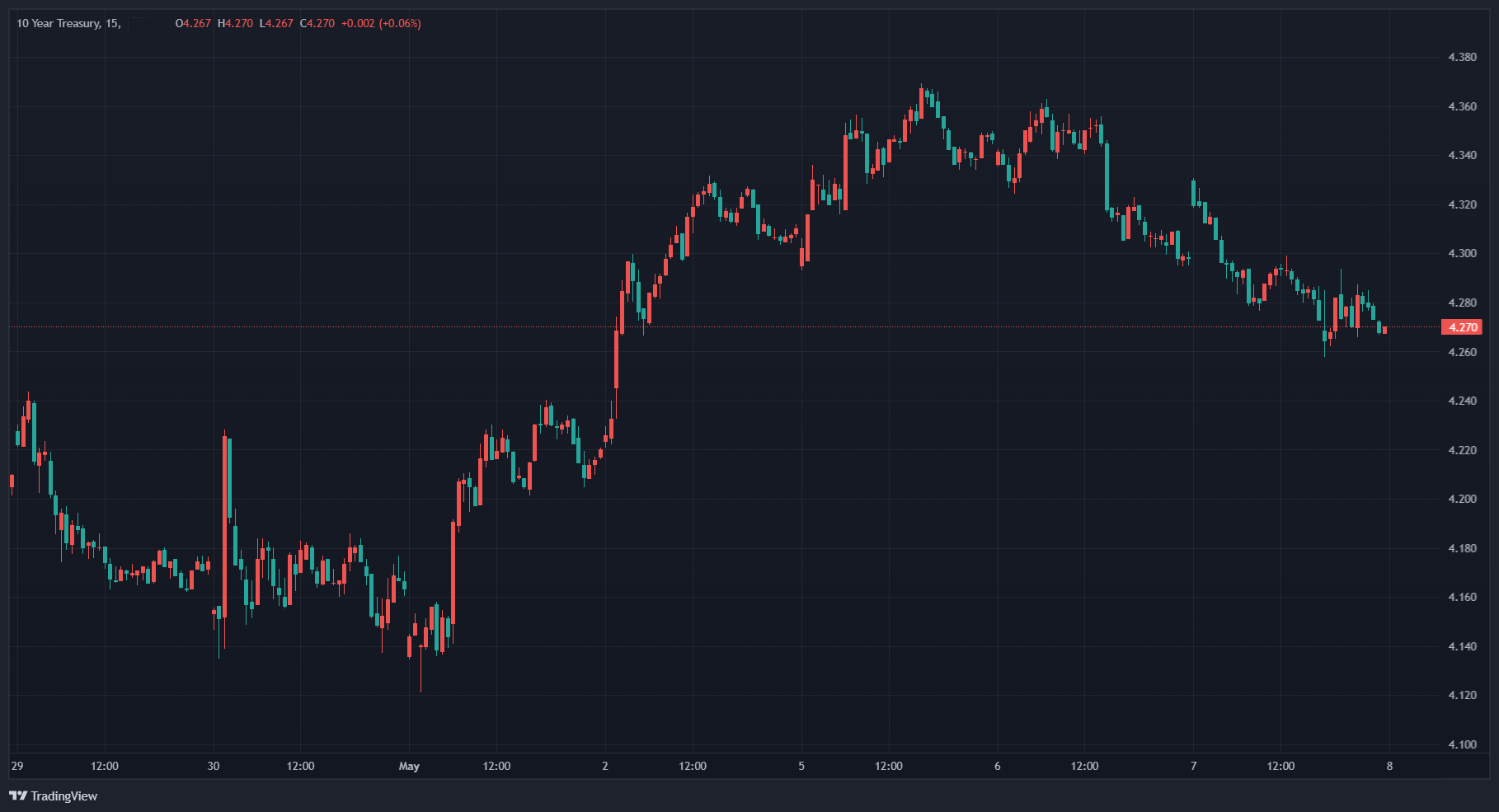
Above is a 5-day chart of the 10-Year Treasury Bond, which is considered the "risk free" rate and acts as a barometer for how mortgage bonds trade.

It is important to remember, in the USA, mortgage rates do not rise or fall. Instead, the cost of each rate changes based on the daily fluctuation in the price of mortgage bonds.
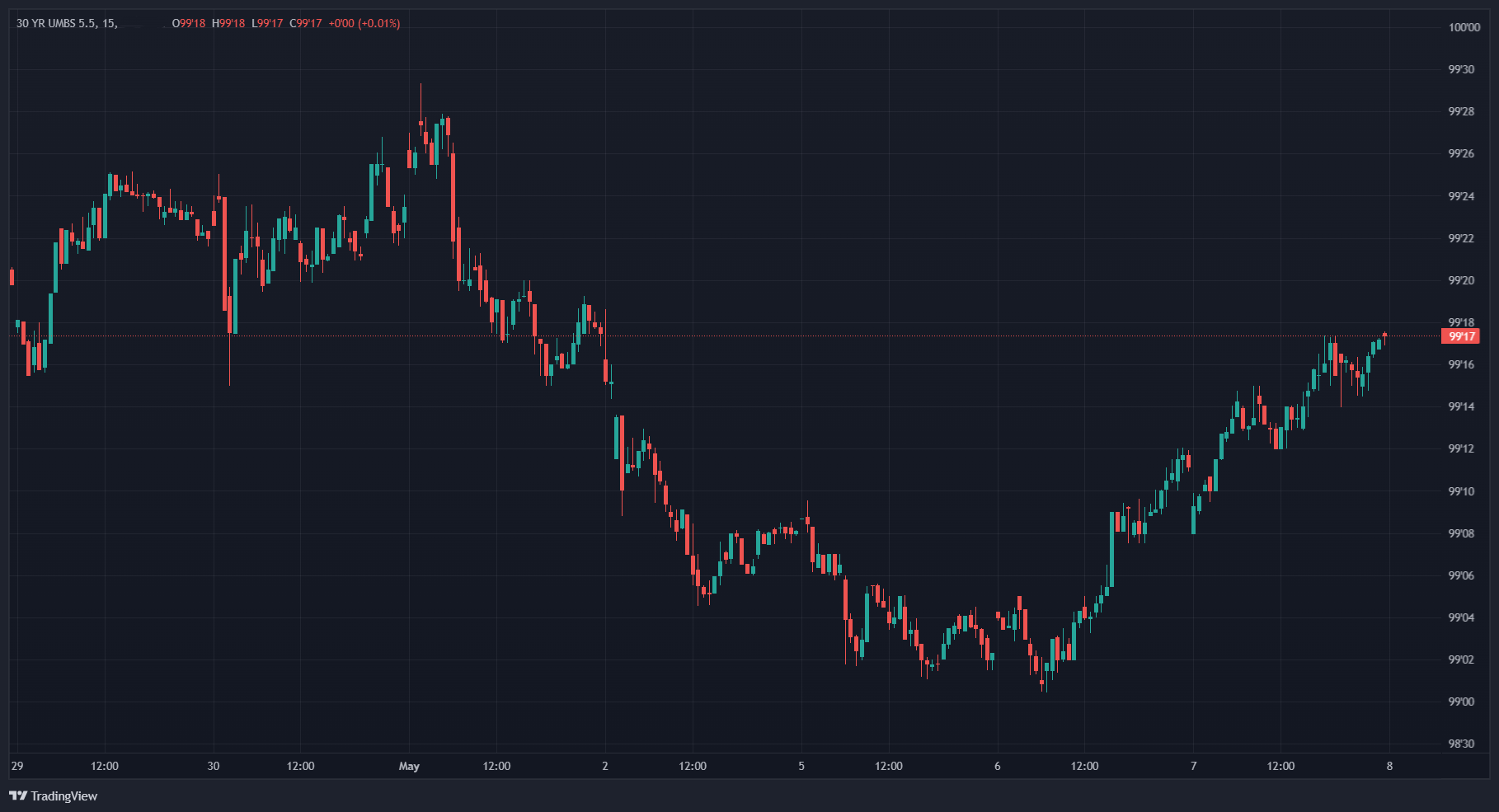
Above is a 5-day chart of the UMBS 5.5 mortgage bond.
The previous chart of the 10-Year Treasury Bond shows the yield (rate), whereas this chart shows the "price" of the bond.
As MBS prices rise, the cost of mortgage rates fall. This makes lower rates more affordable, hence why people think mortgage rates are rising or falling when in fact it is the price of rates that is changing.
🔑 Rate Lock Recommendations (Post-FOMC)
15-Day Closing Window:
Recommendation: ✅ Lock Now
Rationale: The Fed's decision to hold rates steady, coupled with ongoing economic uncertainties, suggests that mortgage rates may remain elevated in the near term. Locking in now can protect against potential rate increases.
30-Day Closing Window:
Recommendation: ⚠️ Cautious Lock
Rationale: With the Fed signaling a "wait and see" approach due to rising risks of inflation and unemployment, there's a possibility of rate fluctuations in the coming weeks. Locking in may be prudent to mitigate exposure to potential rate hikes.
60-Day Closing Window:
Recommendation: 🕒 Float with Caution
Rationale: While the Fed is not in a hurry to adjust rates, they have indicated openness to changes based on evolving economic conditions. If inflation shows signs of easing, there may be opportunities for lower rates in the longer term. However, stay vigilant to market developments.
Want to check customized, real-time mortgage rates instantly?
LendZen gives you anonymous access to mortgage rates that update as bond prices change.
Get full transparency of costs upfront and instant qualification results without any signup or human interaction required.
See for yourself and customize your own loan scenario at LendZen.com.
